What’s really crazy is that nowadays you can pretty much do all your banking without physically going to the bank. Do you need to send money? Pay bills? Check your balance? Just use your phone, a couple of taps, and it’s done. It’s like the work disappears from your hands, almost too simple.
It is exactly the digital comfort that is the source of our convenience that has also invited scammers who are intelligent enough that they can scam with the smartest person.
And they are not mailing you scam links that look shady and are full of errors anymore. No, they are employing the use of official logos, pretend-sounding messages, and even courteous “bank calls” to get bank details from people. Thousands of people all over India are defrauded online every day, and often they don’t even realize when or how it happened.
The fact is, anybody can be tricked, students, professionals, and even people who think they are careful. So instead of acting as if it can’t happen to us, let’s figure out what is happening.
Here are the most common digital banking frauds in India right now, with a guide on how to identify them before they catch you.
1. Phishing – The Fake Link Trap
Phishing is the most commonly used trick that has been successful for the longest time. An email or message comes to you with a text such as:
“If you do not verify your KYC immediately, your bank account will be blocked.”
Looks like a real thing, doesn’t it? The logo, the formatting, everything appears to be genuine. You click on the link, go to a website that looks exactly like your bank’s, and enter your details.
That’s exactly the moment when you might get into trouble. At this point, the scammer, who could be located far away, has access to your login ID, password, and in some cases, even your OTPs.
How can you avoid this scam?
- Make sure not to click on links from unknown sources, even if they appear to be official.
- It is always better to open your bank website by typing the URL manually.
- The fact is that the banks do not ask for personal details or OTPs through email or message.
2. Vishing—The Sweet Talk Scam
This is the most common scam. Basically, you get a call from someone impersonating a bank official or an RBI employee. They sound extremely professional and full of confidence.
They’ll do their act like this:
- “Sir, your card will no longer be valid in a few days. To help us, confirm your card number and CVV.”
- “Ma’am, we are doing KYC verification. Please share the OTP.”
You believe them because they sound so genuine, and within a few moments, your money has been stolen.
Be cautious:
- A bank representative will never ask for your OTP or CVV.
- If you want to be sure, do not talk to them over the phone. Instead, call the bank’s helpline yourself.
- Keep your sensitive information to yourself, even if the person on the other end of the line sounds very convincing.
Also Read: Free Travel for Women in Delhi: Saheli Cards to Ensure Safety
3. SIM Swap Fraud—The Silent Killer
This particular instance of fraud is quite frightening because it takes place without making any noise. To begin with, the villains gather your private information (such as Aadhaar, PAN, or DOB) from data that might have been leaked or through some kind of call that is faked. Afterwards, they reach out to your mobile operator, impersonating you, and say, “I have lost my SIM card; kindly give me a new one.”
So, after getting a duplicate SIM, they go on to receive all the OTPs and bank alerts that are meant for you while your real SIM, hence, is rendered non-functional. Basically, you will not even know what exactly is happening, and you will be scammed in just a few seconds.
By the time you realize it, extensive harm has already been caused.
Save yourself:
- It is better not to give out your personal documents or ID numbers that way.
- In the case that your SIM is doing you a surprise by not working, get in touch with your mobile provider without delay.
- Make sure that both SMS and email alerts are turned on for your bank account.
Check: Top 10 Government Apps in India You’re Not Using (But Should!)
4. UPI Fraud – The New-Age Scam
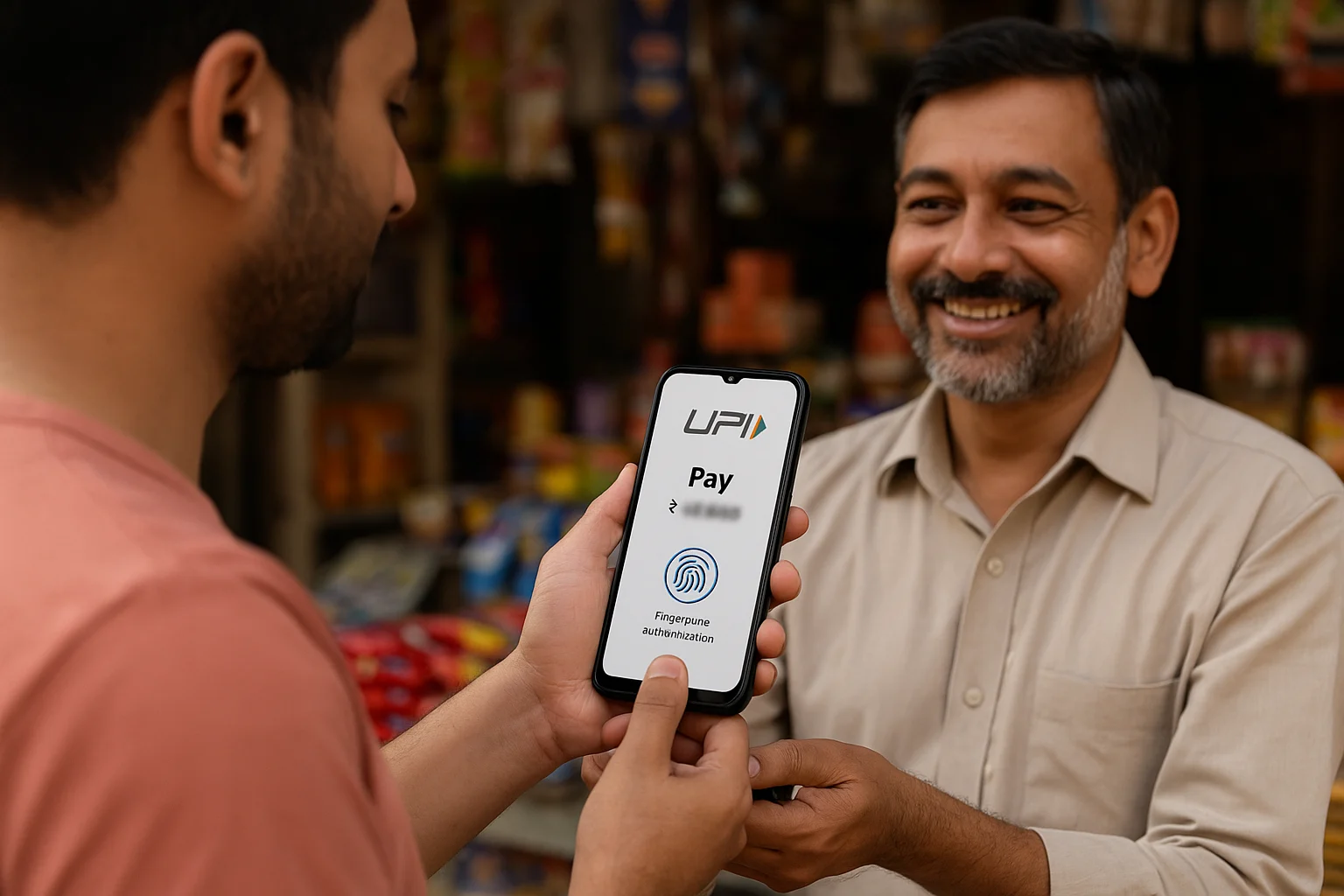
While UPI payments are extremely handy, this is also the reason why fraudsters take advantage of them. There is a payment request on Google Pay, PhonePe, or Paytm that reads:
“Congratulations! You have received ₹2000 cashback! Click here to get your reward.”
The catch? When you click Approve, you’re not getting money; you’re sending it.
Some even send counterfeit QR codes or “refund” links that directly lead to their accounts.
How to stay safe:
- Keep in mind: receiving money does not require you to enter your PIN.
- Do not accept requests from strangers.
- Always confirm the identity of the person before making the payment
5. Fake Customer Care Numbers
This is what a lot of people are doing recently. When you look for a bank’s customer care number on Google and pick up the phone, you call the first number without checking if it is real.
On the other side, the “executive” therefore requests your account details, screen-sharing access, or OTP, and within a few minutes, your balance becomes zero.
To stay away from this:
- Customer care numbers should always be taken from the official websites or apps.
- Do not permit the use of any screen-sharing app during banking calls.
- If you are unsure, do not hesitate to hang up and talk to the bank personally.
Conclusion: Stay a step ahead by staying aware
To be honest, the scams we talked about are only a small fraction of what is going on in the digital fraud world. The digital fraud world is way bigger, smarter, and faster than most people can even imagine. Scammers are always ten steps ahead of the newly introduced security measures.
Hence, the point of the exercise is not to be frightened but to stay aware.
This is because most of these fraudulent schemes can only succeed if we act hastily and do not verify. Be it a message, a call, or an “urgent” link, just take that extra five seconds to think, could this be a trap?
Banking digitally is safe, strong, and easy to use if you employ it correctly.
Therefore, keep your details safe, give your trust only to the sources that are verified, and remember: being alert is your best weapon in the network world. Stay smart, stay secure, and for more such updates on digital safety and online trends, keep following UpdateMee.